























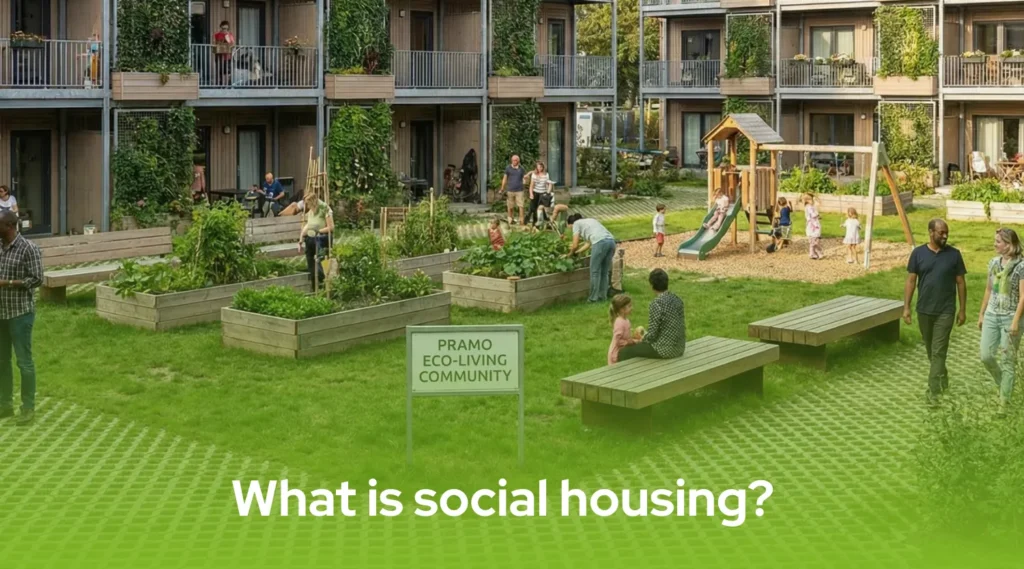
What is Social Housing? A Modern Approach to the Global Shelter Crisis
As cities expand and populations grow, the global conversation around urban planning has centered on one critical question: What is social housing?
For decades, the answer was simple: government-subsidized shelter for low-income populations. However, as we move further into the 21st century, this definition is undergoing a radical transformation. Today, answering “what is social housing” requires looking beyond just financial definitions; it involves examining engineering, sustainability, and the dignity of human life.
Social housing is no longer just about providing a roof. It is about creating safe, energy-efficient, and sustainable communities that can be built quickly to meet urgent demands. At Pramo, we are at the forefront of this shift, replacing slow traditional construction methods with advanced modular technology.
The Evolution of Affordable Living
To truly understand the modern landscape, we must first address the challenges of the past. Traditional social housing projects have often been plagued by high costs, years of construction delays, and poor insulation standards.
In the face of rapid urbanization and housing shortages, the old methods are simply too slow. Governments, municipalities, and NGOs are now looking for solutions that reduce the gap between planning and occupancy. This search for efficiency has led the industry directly to pre-engineered solutions.
Scalable Solutions for Communities
The most pressing challenge in social housing is often scale. How do you house hundreds or thousands of people—such as workers, students, or displaced communities—securely and hygienically?
This is where the industrial advantage becomes clear. When projects require high-capacity accommodation without the years-long wait of concrete construction, the industry turns to modular systems. At Pramo, we specialize in manufacturing prefabricated social buildings that are designed to withstand heavy use while providing high comfort. These structures are not merely temporary fixes; they are robust, multi-story complexes equipped with modern insulation and fire safety systems, allowing authorities to deploy fully functional living quarters in a fraction of the time required for conventional buildings.
By shifting the construction process to a controlled factory environment, we eliminate weather delays and site inefficiencies, ensuring that large-scale housing projects stay on budget and on schedule.
Individual Dignity in Social Housing Design
While large complexes solve the issue of density, there is another vital aspect to the question of what is social housing: the need for privacy and family life.
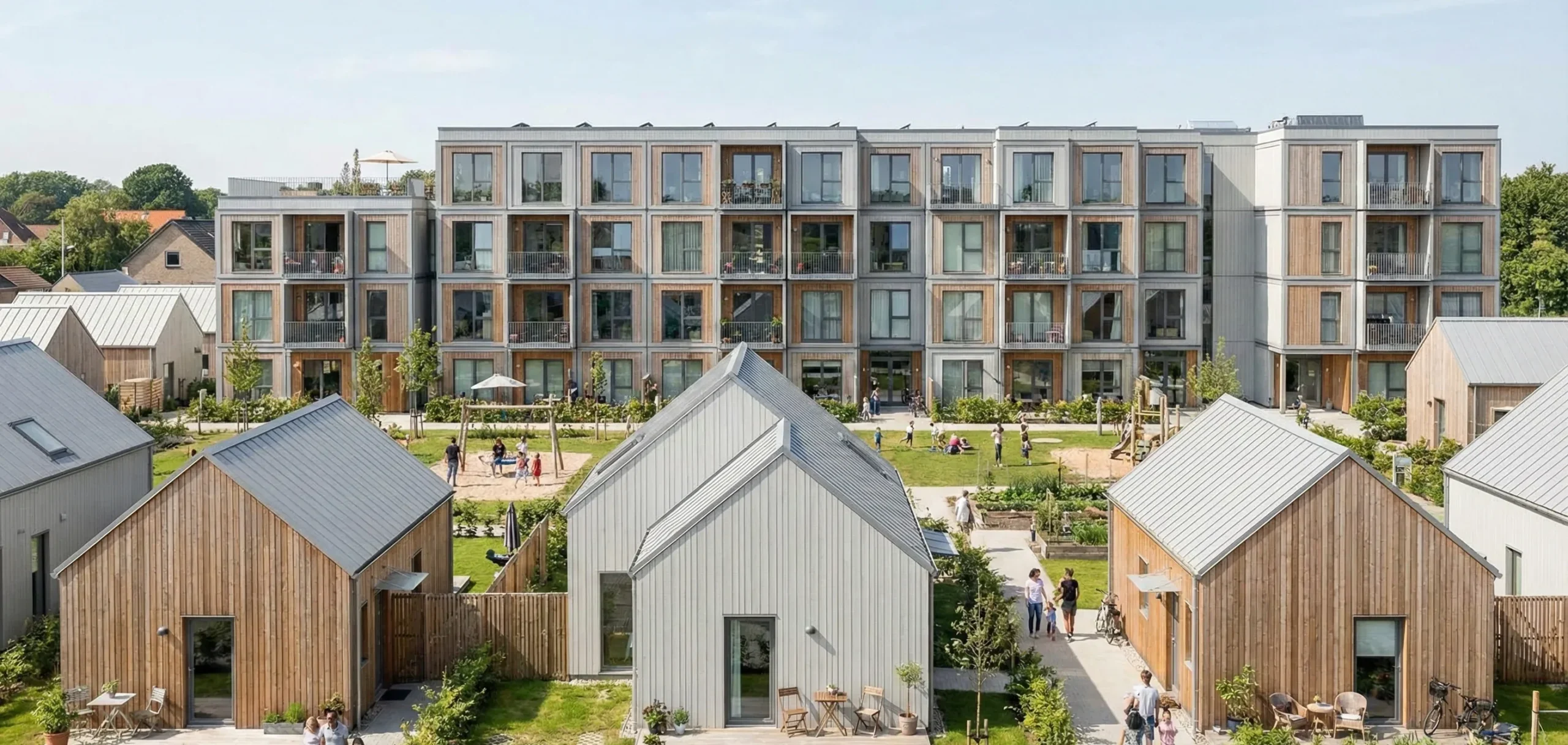
Effective social policies often aim to settle families in suburban or rural areas to decongest city centers. In these scenarios, the goal is to provide standalone units that offer a sense of ownership and normalcy. Moving away from the “block” mentality, planners are increasingly adopting our prefab house models to create cohesive neighborhoods. These homes offer the aesthetic appeal of traditional architecture—with pitched roofs, verandas, and customizable layouts—but are built with the precision of light steel technology.
A Pramo prefab house offers a sustainable solution for low-income households by drastically reducing energy bills through superior thermal insulation. This proves that social housing can be both economical for the state to build and economical for the resident to live in.
Sustainability and The Green Future
Modern social housing must also be green housing. The environmental impact of construction is a major concern for forward-thinking governments.
Prefabricated construction significantly reduces construction waste, water usage, and noise pollution compared to traditional sites. By using recyclable materials like steel and optimizing material usage in the factory, we lower the carbon footprint of every project.
Furthermore, energy efficiency is a core component of affordability. A well-insulated building requires less energy to heat in winter and cool in summer, which is a critical factor for social housing residents who need to manage their living costs tightly.
 Redefining the Standard
So, what is social housing today? It is a dynamic sector where engineering meets social responsibility. It is the ability to turn a bare plot of land into a thriving community in a matter of weeks, not years
Whether the requirement is for high-density prefabricated social buildings to support a growing workforce or individual prefab house units for family settlements, the answer lies in modern construction technology.
At Pramo, we are proud to build the infrastructure that communities rely on. By combining speed, durability, and cost-efficiency, we are helping to rewrite the definition of social housing