





















Coastal prefabricated buildings offer rapid deployment and cost-effectiveness, yet they confront significant challenges from the unforgiving marine environment. The constant exposure to saltwater, high humidity, strong winds, and fluctuating temperatures creates an aggressive setting that accelerates material degradation. Understanding and implementing robust corrosion protection strategies is paramount to ensuring the longevity, structural integrity, and safety of these structures.
This article explores the primary corrosion risks in coastal areas and details the most effective methods and materials to safeguard prefabricated buildings against these destructive forces. We will delve into design considerations, material selection, and advanced protective coatings that are crucial for any successful coastal construction project.
Understanding Corrosion Risks in Marine Environments
Marine environments are inherently corrosive due to several key factors. Saltwater, rich in chloride ions, acts as a powerful electrolyte, accelerating electrochemical reactions that lead to rust and material breakdown. High humidity levels further contribute to moisture accumulation, creating ideal conditions for corrosion.
Additionally, salt spray carried by strong coastal winds can deposit corrosive particles onto building surfaces, even those not directly in contact with water. The combined effect of these elements necessitates a comprehensive approach to corrosion protection.
The Impact of Salinity and Humidity
The salinity of seawater is a major driver of corrosion. Chloride ions penetrate protective layers and initiate pitting corrosion, which can be particularly damaging to metals. High humidity maintains a constant film of moisture on surfaces, creating a continuous electrolyte for corrosion processes.
This relentless exposure can compromise the structural integrity of steel components, degrade concrete, and shorten the lifespan of various building materials if not adequately addressed during design and construction.
Material Selection for Coastal Prefabricated Buildings
Choosing the right materials is the first and most critical step in protecting coastal prefabricated buildings. While steel is a common structural material, its susceptibility to rust in marine settings requires careful consideration.
Stainless steel, particularly grades like 316, offers superior corrosion resistance due to its chromium content, which forms a passive protective layer. However, its higher cost may necessitate a more strategic application.
- Galvanized Steel: Zinc coatings provide a sacrificial layer, protecting the underlying steel even if scratched. Hot-dip galvanization offers excellent durability.
- Aluminum Alloys: Lightweight and inherently corrosion-resistant, certain aluminum alloys are well-suited for coastal applications, especially for non-structural or cladding elements.
- Fiber-Reinforced Polymers (FRP): These composite materials are immune to rust and offer high strength-to-weight ratios, making them excellent choices for structural components in highly corrosive zones.
- Treated Timber: For wooden elements, pressure-treated timber with preservatives enhances resistance to moisture and biological degradation.
Effective Corrosion Protection Strategies
Beyond material selection, several active and passive strategies can be employed to enhance corrosion protection. These include specialized coatings, cathodic protection, and thoughtful architectural design.
Protective Coatings and Finishes
Applying high-performance coatings is a cornerstone of corrosion prevention. These coatings create a barrier between the material and the corrosive environment.
- Epoxy Coatings: Offer excellent adhesion and chemical resistance, providing a durable protective layer for steel.
- Polyurethane Coatings: Provide good UV resistance and flexibility, often used as topcoats over epoxy primers for enhanced durability.
- Zinc-Rich Primers: Act as a sacrificial layer, similar to galvanization, offering active electrochemical protection.
- Marine-Grade Paints: Specifically formulated to withstand saltwater exposure and inhibit corrosion.
Regular inspection and maintenance of these coatings are essential to repair any damage that could compromise their protective function.
Design Considerations for Enhanced Durability
Architectural design plays a crucial role in mitigating corrosion risks. Thoughtful design can minimize areas where water and salt can accumulate.
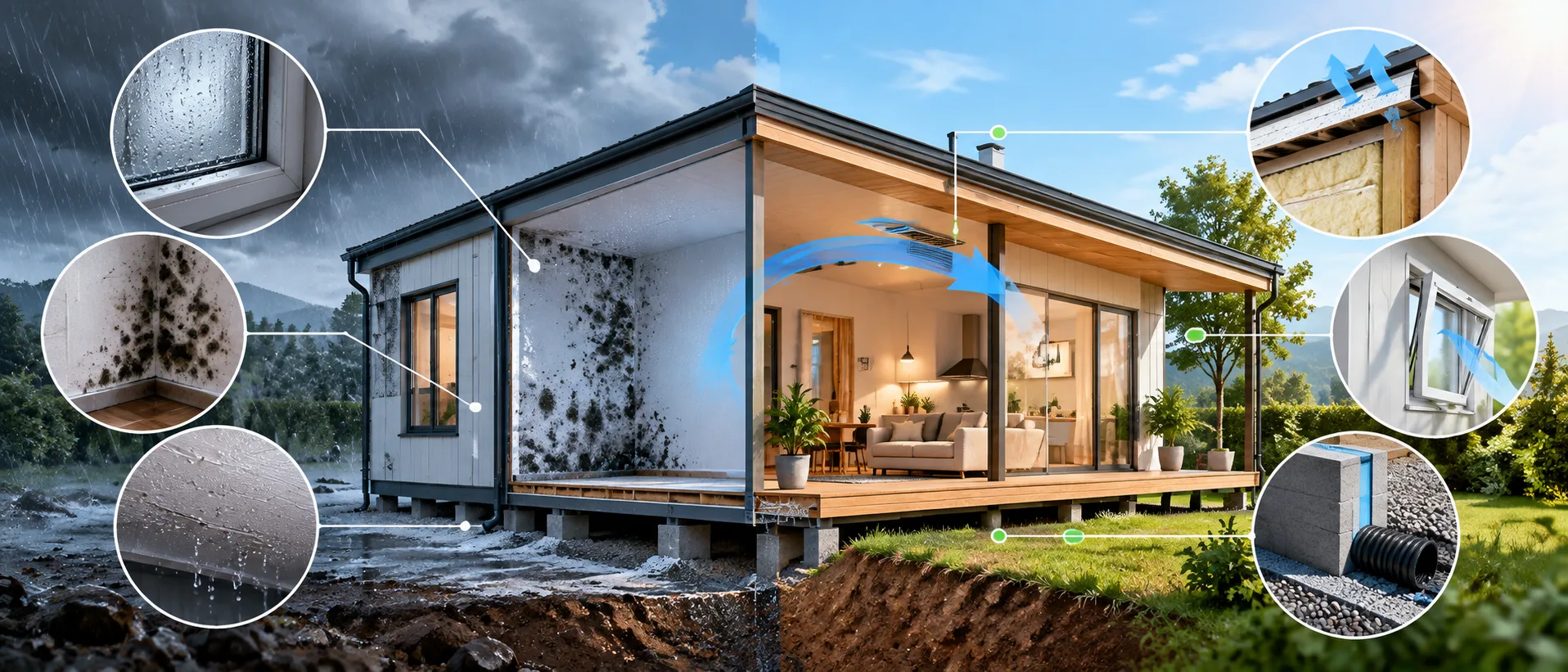
For instance, incorporating sloped surfaces, drip edges, and proper drainage systems helps prevent standing water. Elevating structures above the highest tide line and designing for adequate ventilation can also reduce moisture accumulation.
When designing modular buildings for challenging climates, like those discussed in Cold-Climate Modular Buildings: Insulation, Thermal Bridges and Snow Loads or Designing Modular Buildings for Desert Climates: Heat, Dust & Solar Gain, specific environmental factors dictate material and design choices. Similarly, coastal environments demand specialized protective measures.
Maintenance and Monitoring
Even with the best materials and protection strategies, regular maintenance is vital for coastal prefabricated buildings. Routine inspections can identify early signs of corrosion or coating damage, allowing for timely repairs before major issues develop.
Cleaning surfaces to remove salt deposits and debris helps maintain the integrity of protective layers. Implementing a scheduled maintenance program ensures that the building remains protected throughout its lifespan.
PRAMO İNŞAAT MÜH. VE TİC. LTD. ŞTİ. specializes in providing robust and sustainable prefabricated building solutions for diverse environments, including challenging coastal regions. Our expertise ensures that your coastal projects are designed and constructed with the highest standards of corrosion protection, guaranteeing long-term performance and peace of mind. Contact us today to learn more about our innovative building solutions.
Sıkça Sorulan Sorular
Why are coastal prefabricated buildings more susceptible to corrosion?
Coastal buildings are exposed to a unique combination of saltwater, high humidity, and salt spray. These elements accelerate electrochemical reactions, leading to faster degradation of materials like steel and concrete compared to inland environments.
What are the best materials to use for coastal prefabricated buildings?
For coastal environments, materials with inherent corrosion resistance are preferred. These include galvanized steel, stainless steel (especially 316 grade), aluminum alloys, fiber-reinforced polymers (FRP), and pressure-treated timber for specific applications. The choice depends on structural requirements and budget.
How do protective coatings help against corrosion?
Protective coatings create a physical barrier between the building materials and the corrosive marine environment. High-performance coatings like epoxies, polyurethanes, and zinc-rich primers prevent moisture and salt ions from reaching the substrate, thereby inhibiting rust and degradation.
What design considerations are important for corrosion protection in coastal areas?
Effective design includes incorporating features that prevent water and salt accumulation. This involves using sloped surfaces for drainage, designing for proper ventilation, elevating structures, and avoiding ‘salt traps’ where corrosive elements can collect. Strategic material placement also plays a role.
Is cathodic protection necessary for coastal prefabricated buildings?
Cathodic protection can be a highly effective strategy for specific metallic components in severe marine environments, especially submerged or buried structures. It works by providing an alternative sacrificial metal or impressed current to prevent the primary metal from corroding. Its necessity depends on the specific design and exposure level.