





















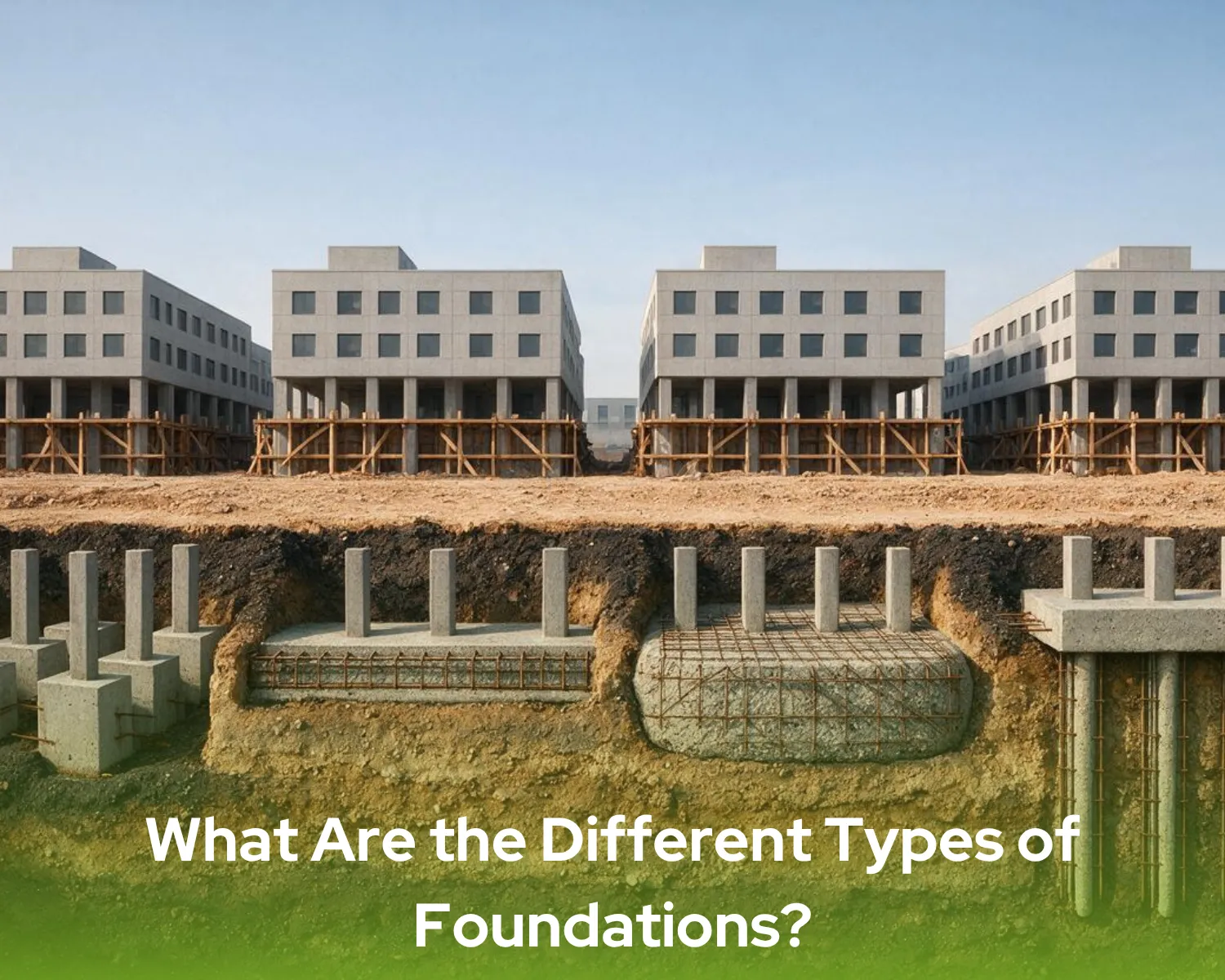
Foundations are essential for the safety, stability and long-term performance of buildings. They receive loads from the structural system and distribute them safely into the ground. Since building characteristics and soil conditions vary between projects, different types of foundations are used.
Foundation systems are generally divided into two main groups: shallow foundations and deep foundations. Isolated, combined, strip, raft and grid foundations are examples of shallow systems. Pile and caisson foundations are classified as deep systems.
The correct foundation cannot be selected solely according to the height of a building. Ground investigation results, total structural loads, groundwater conditions, seismic risks and the arrangement of load-bearing elements must all be considered.
What Is a Foundation?
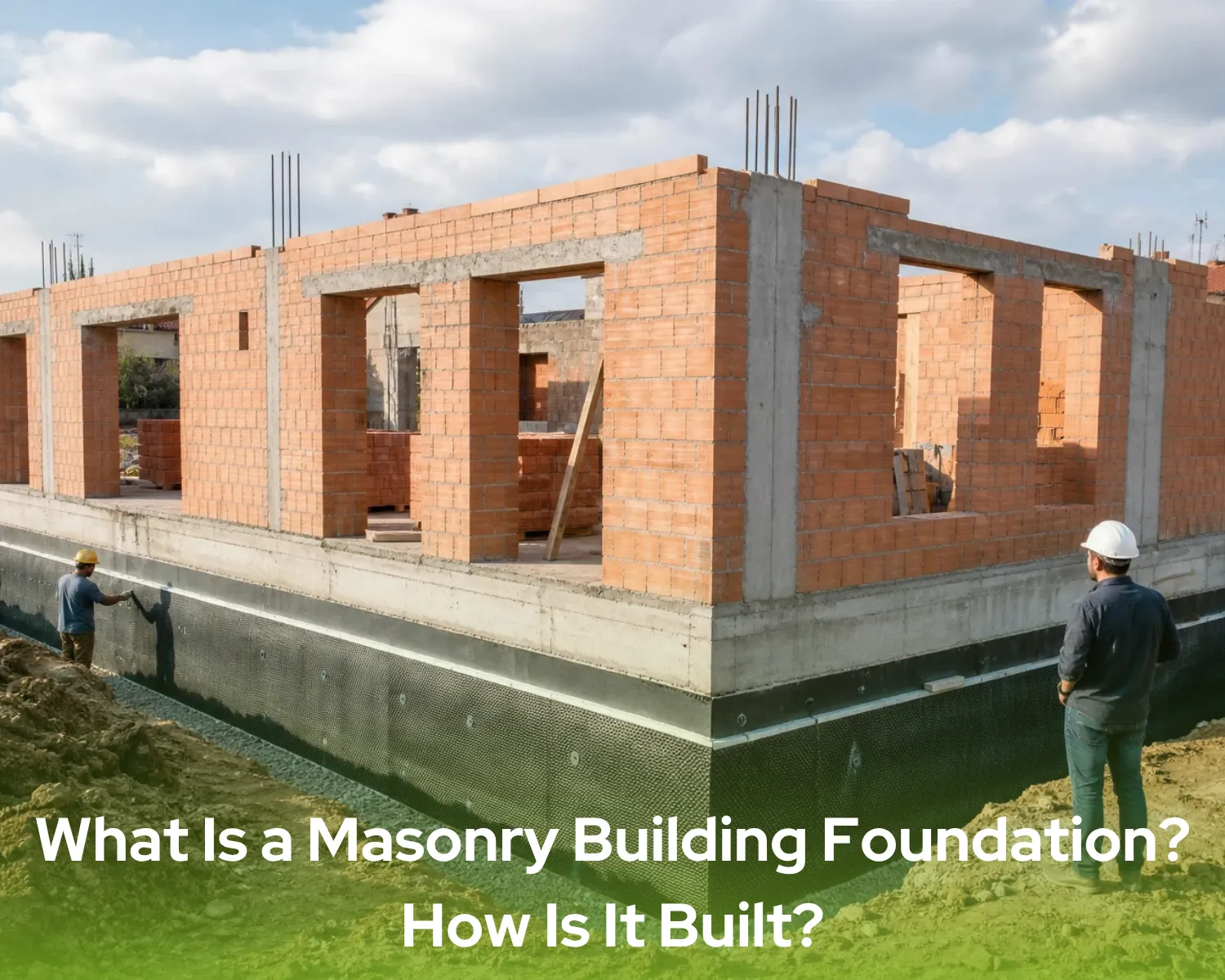
A foundation is the lowest structural section of a building. It receives loads transferred through columns, shear walls and load-bearing walls before distributing them into the ground.
Its main purpose is to spread these loads across a sufficient area without exceeding the bearing capacity of the soil. A correctly designed foundation helps limit excessive settlement, differential movement and structural instability.
The dimensions, depth, concrete strength and reinforcement of a building foundation must be determined through structural calculations based on the ground investigation.
What Are the Functions of a Foundation?
A foundation creates a secure connection between the building and the ground. Its principal functions include:
- Transferring vertical and horizontal loads into the ground,
- Distributing structural loads evenly,
- Limiting excessive and differential settlement,
- Supporting the building against sliding, rotation and overturning,
- Transferring seismic and wind forces into the ground,
- Helping the structural system work as a complete unit,
- Supporting protection against groundwater and moisture.
To perform these functions safely, the selected foundation system must be suitable for both the building and the ground conditions.
How Are Foundation Types Classified?
The main types of foundations are classified according to the depth at which structural loads are transferred:
- Shallow foundations,
- Deep foundations.
Shallow foundations distribute loads into soil layers close to the surface. Deep foundations transfer loads to stronger soil or rock layers located further below ground level.
What Are Shallow Foundations?
Shallow foundations are generally used when the near-surface ground layers offer sufficient bearing capacity. Their construction depth is relatively limited compared with their width.
The principal shallow foundation types are:
- Isolated foundation,
- Combined foundation,
- Strip foundation,
- Raft foundation,
- Grid foundation.
Isolated Foundation
An isolated foundation is constructed separately beneath an individual column. It spreads the concentrated column load over a wider ground surface.
This system may be used where column spacing is sufficient, building loads are moderate and the ground provides adequate bearing capacity. Isolated foundations can be square, rectangular or another shape determined by the structural calculations.
They may be connected by reinforced concrete ground beams to improve the overall performance of the foundation system.
Combined Foundation
A combined foundation supports two or more columns on the same reinforced concrete base. It may be used when columns are positioned too closely for separate isolated foundations.
This solution can also be selected when a column is located near the site boundary and a centred isolated foundation cannot be constructed. The shape and dimensions of the foundation are designed according to column positions, loads and ground conditions.
Strip Foundation
A strip foundation provides continuous support beneath a load-bearing wall or a line of closely spaced columns. It is also known as a continuous foundation.
Strip foundations distribute linear loads over a wider area and are frequently used in masonry structures. They may also be applied in framed structures where columns are positioned along the same axis.
The width, height and reinforcement of the strip foundation must be calculated according to the ground bearing capacity and loads transferred by the building.
Raft Foundation
A raft foundation is a large reinforced concrete slab that covers all or most of the building footprint. It spreads structural loads over a broad surface and helps create a more balanced ground pressure distribution.
Raft foundations may be used where the ground has relatively limited bearing capacity, columns are positioned close together or differential settlement needs to be controlled.
Different systems include flat rafts, beam-and-slab rafts, cellular rafts and piled rafts. The required system depends on the structural loads and ground characteristics.
Grid Foundation
A grid foundation consists of reinforced concrete beams extending in two directions beneath the building. These interconnected beams distribute concentrated structural loads over a wider area.
It can be considered where column loads are high or additional foundation rigidity is required. Although grid and raft foundations can serve similar purposes, they are structurally different. A raft uses a continuous reinforced concrete slab, while a grid foundation transfers loads mainly through interconnected beams.
What Are Deep Foundations?
Deep foundations are used when near-surface soil layers cannot safely support the building. They transfer structural loads to stronger layers located deeper below the surface.
A deep foundation may be required when:
- Near-surface soil has low bearing capacity,
- A competent soil layer is located at considerable depth,
- Structural loads are particularly high,
- There is a serious settlement risk,
- The site contains soft soil or uncontrolled fill,
- Groundwater affects the construction conditions,
- A bridge, port or heavy industrial structure is being built.
Pile and caisson foundations are the principal deep foundation types.
Pile Foundation
A pile foundation uses long structural elements to transfer loads to deeper soil or rock layers. Piles can be produced from reinforced concrete, steel or other materials suitable for the project.
Loads may be carried through end bearing, friction along the pile surface or a combination of both mechanisms. The diameter, length, number and arrangement of piles are determined through detailed geotechnical and structural calculations.
Pile foundations are commonly used for high-rise buildings, bridges, industrial facilities and structures built on weak ground.
Caisson Foundation
A caisson foundation is a deep foundation system used when a strong bearing layer is located at a significant depth. Large hollow structural units are gradually sunk into the ground until the required level is reached.
Caissons are commonly used for bridge piers, harbour structures, quays and heavy structures constructed in or near water. Open, pneumatic and floating caissons can be selected according to water depth, ground conditions and project requirements.
Shallow and Deep Foundations: What Is the Difference?
The main difference between shallow and deep foundation systems is the depth at which building loads are transferred.
Shallow foundations rely on soil layers close to ground level and are generally easier to construct. Deep foundations use piles, caissons or similar elements to reach stronger layers located further below the surface.
Shallow foundations include isolated, combined, strip, raft and grid systems. Deep foundations primarily include pile and caisson systems. The appropriate group must be selected according to site-specific ground and structural conditions.
Foundation Selection for Prefabricated Buildings
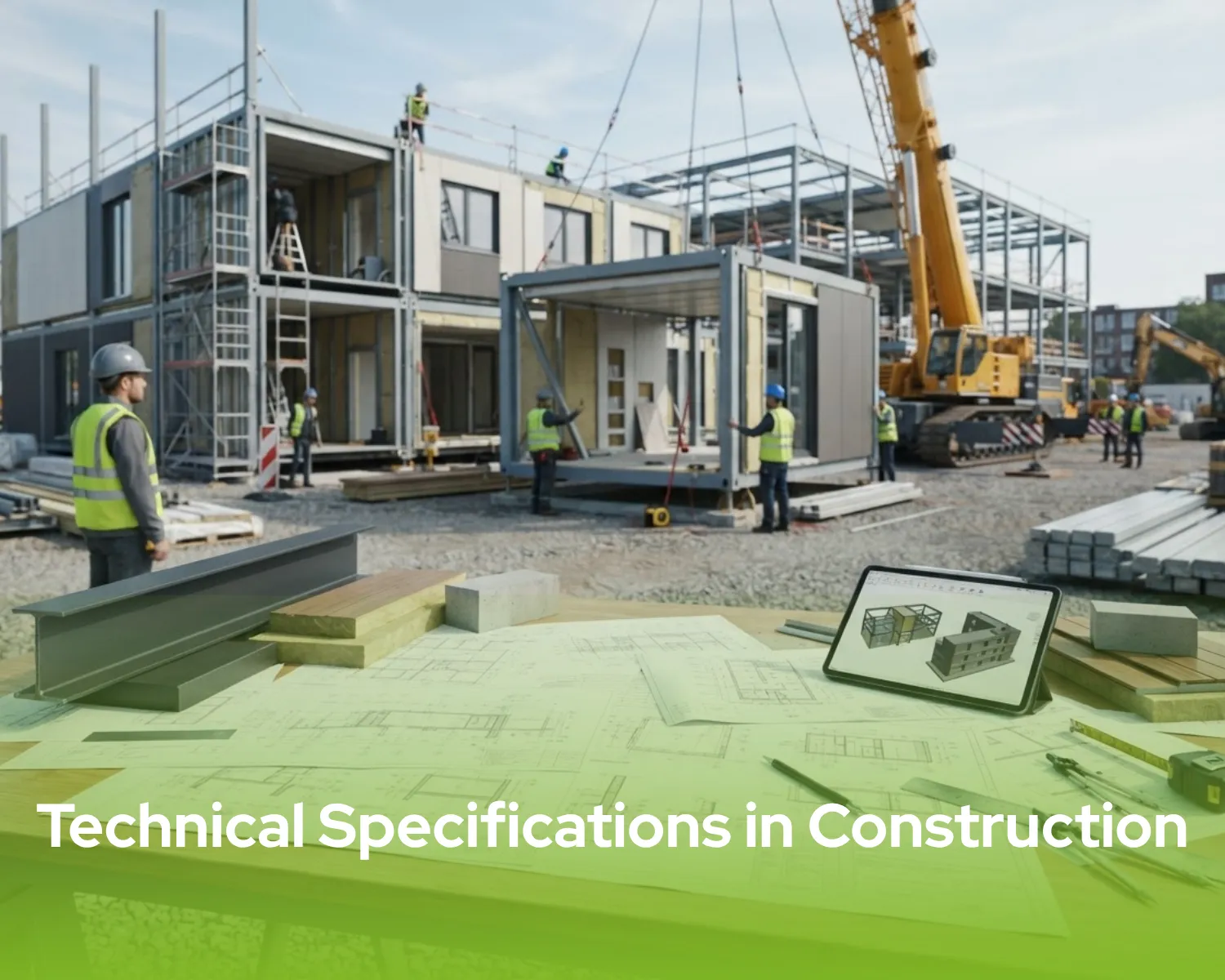
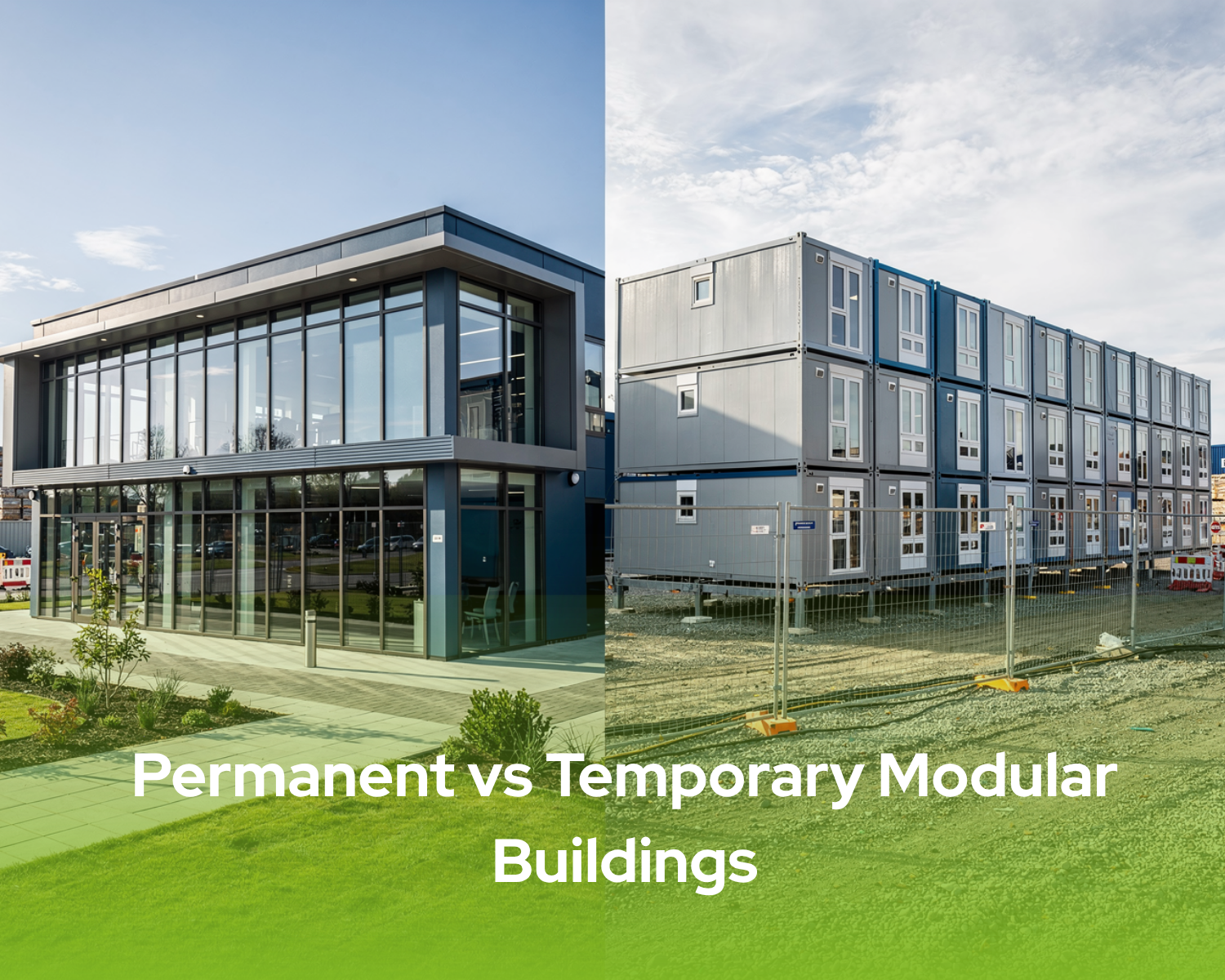
The foundation of a prefabricated building must be selected according to its dimensions, total weight, intended use and ground conditions. A correctly prepared foundation supports accurate installation and allows structural loads to be transferred evenly into the ground.
A single-storey prefabricated unit and a large multi-storey structure may require different foundation solutions. Depending on the project, strip, raft or other reinforced concrete foundations may be considered. You can explore solutions for different applications on our prefabricated buildings page.
Which Factors Affect Foundation Selection?
There is no single foundation system suitable for every building. The selection of the correct foundation depends on:
- Ground classification and bearing capacity,
- Total building weight and number of storeys,
- Arrangement of columns, walls and other structural elements,
- Depth of the competent soil layer,
- Groundwater level,
- Settlement and liquefaction risks,
- Site slope and surrounding structures,
- Seismic conditions,
- Feasibility of excavation,
- Intended use and structural system of the building.
Foundation selection should not be based only on construction cost or convenience. Ground investigation data must be evaluated together with the architectural and structural designs to determine the safest system for the project.