






















In the rapidly evolving landscape of modern industry, companies are constantly seeking ways to increase agility, reduce overhead, and foster innovation. One of the most discussed organizational models to achieve these goals is the horizontal or “flat” hierarchy. But what is a flat structure in business, and how does it impact the decision-making process in sectors like modular construction and prefabricated building?
At Pramo Prefabricated, we believe that transparency and direct communication are not just internal values but are reflected in the way we deliver our Prefabricated Building Solutions. Understanding what is a flat structure in business is essential for any modern firm looking to streamline operations, much like how our modular systems streamline the construction process.
Defining the Concept: What is a Flat Structure in Business?
To put it simply, a flat structure is an organizational model with few or no levels of middle management between staff and executives. When asking what is a flat structure in business, the core answer lies in the “span of control.” In a flat organization, managers have a wide span of control, and employees are given more autonomy and responsibility
According to Organizational Structure , this model contrasts sharply with traditional “tall” hierarchies, where multiple layers of management can slow down communication. For a company like Pramo, asking what is a flat structure in business means looking at how we can deliver Container Solutions more efficiently by empowering our specialized teams to make faster on-site decisions.
Why Modern Companies are Going Flat
The shift towards horizontal management isn’t just a trend; it’s a response to the need for speed. When exploring what is a flat structure in business, we see several key drivers:
-
Faster Communication: Ideas flow directly from the ground up without getting stuck in bureaucratic filters.
-
Cost Reduction: Fewer middle managers mean lower administrative costs and higher budget allocation for R&D.
-
Employee Empowerment: Staff feel more “ownership” over their projects, leading to higher quality output.
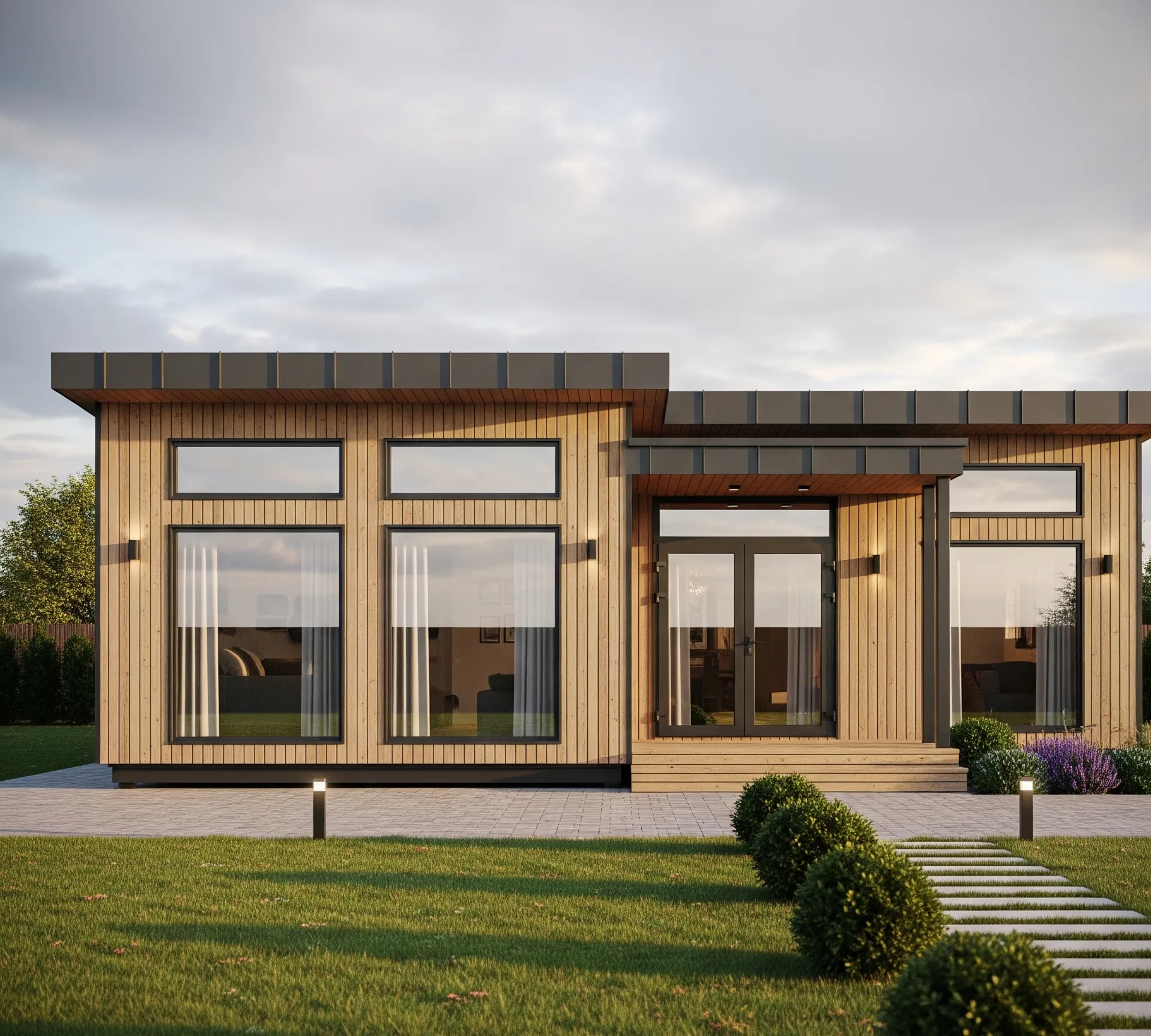 At Pramo, we apply these principles to our project management. By reducing unnecessary bureaucratic layers, we ensure that our clients receiving Light Steel Structures get direct answers from our engineering experts without delay.
The Relationship Between Flat Structures and Innovation
Innovation thrives where barriers are low. When a junior engineer at a construction firm doesn’t have to go through four levels of approval to suggest a better insulation technique, the company innovates faster. This is a primary benefit when analyzing what is a flat structure in business.
In the prefabricated industry, where precision is paramount, a flat structure ensures that the technical feedback from the production line reaches the design team instantly. This synergy is what allows Pramo to maintain its high standards in Modular House Production.
Flat Structure vs. Tall Hierarchy: A Technical Comparison
To better understand what is a flat structure in business, we must compare it to the traditional vertical model:
| Feature | Flat Structure (Horizontal) | Tall Hierarchy (Vertical) |
| Management Layers | Minimal (1-2 layers) | Multiple (4+ layers) |
| Decision Speed | High / Instant | Low / Sequential |
| Employee Autonomy | High | Low |
| Primary Cost | Skilled Labor & Training | Management Salaries |
This comparison highlights what is a flat structure in business in terms of financial viability.
When Does a Flat Structure Fail?
While the benefits are many, it is crucial to ask: what is a flat structure in business when it fails? Without clear roles, a flat organization can suffer from:
-
Role Confusion: Employees may not know who has the final say in critical moments.
-
Manager Overload: Wide spans of control can burn out top-level executives who try to supervise too many people.
-
Scalability Issues: Maintaining a flat structure as a company grows from 50 to 5,000 employees is a significant challenge.
To mitigate these, Pramo Prefabricated utilizes clear “Project Ownership” models. We ensure that while the communication is flat, the accountability is high, especially in complex Prefabricated Villa designs.
Flat Structure in Modular Construction
Consider a large-scale project involving multiple Prefabricated Buildings. In a tall hierarchy, a change in the site plan might take weeks to approve through various committees. In a flat structure, the site manager has the authority to consult directly with the client and the lead architect.
This real-world application of what is a flat structure in business saves time, money, and resources.
Flexibility in Modular Production: The Link Between Flat Structure and Product Design
One of the greatest advantages of a horizontal layout in the corporate world is that operational processes align perfectly with the nature of the product. At Pramo Prefabricated, the modular solutions we offer are a direct reflection of our managerial agility. Specifically, our Flatpack Container systems—noted for their logistical ease and rapid installation—present a structure that is “stripped of unnecessary burdens” and “focused on quick action,” much like a flat organizational chart.
If we are looking for the physical equivalent of what is a flat structure in business, our Flatpack solutions serve as a perfect example:
-
Fast Decision / Fast Installation: Just as decisions are made rapidly in an office without complex hierarchies, Flatpack containers are erected on-site with the same speed.
-
Efficiency: Just as removing unnecessary management layers reduces overhead costs, the stackable design of these containers minimizes transportation expenses.
The development process of such innovative products is a direct result of the what is a flat structure in business model. Because feedback from field teams reaches the design department instantly—without getting stuck in middle-management layers—we can optimize our Flatpack technology every single day.
Employee Satisfaction and the Psychology of Trust
Research suggests that employees in flat organizations are often more satisfied. They feel heard and valued. When answering what is a flat structure in business, one must include the psychological impact of trust.
Trust is the foundation of our Customer Services at Pramo. We trust our experts to deliver the best results, which in turn leads to superior quality in our final products. This culture of trust attracts top talent who seek autonomy rather than micro-management.
How to Implement a Flat Structure in Your Business
If you are a business owner wondering what is a flat structure in business and how to adopt it, consider these steps:
-
Invest in Training: Autonomy requires highly skilled employees who can make informed decisions.
-
Clarify Objectives: Everyone must know the “North Star” of the company to ensure decentralized decisions align with the main goal.
-
Utilize Technology: Use collaborative tools (Slack, Trello, ERPs) to replace manual reporting.
Our commitment to innovation at Pramo involves using the latest BIM (Building Information Modeling) teknolojileri. This supports a flat communication flow between our architects and our factory, ensuring that everyone is looking at the same real-time data.
The Future of Organizational Design
The question what is a flat structure in business will continue to be relevant as we move towards a more digital and decentralized economy. Whether you are building a startup or a global Prefabricated Solutions firm, the ability to act fast and empower your team is a competitive advantage.
At Pramo Prefabricated, we are proud to combine flat organizational efficiency with world-class engineering. We invite you to explore our latest projects and see how our structure benefits our clients.