





















The global supply chain landscape of 2026 has created a fascinating secondary market for steel structures. As sustainability moves from a corporate buzzword to a practical necessity, the demand for recycled industrial materials has skyrocketed. For architects, DIY enthusiasts, and business owners, the question of where to buy used shipping containers has become the starting point for innovative projects ranging from backyard offices to complex multi-unit housing developments.
At Pramo Prefabricated, we have spent decades transforming raw industrial boxes into high-performance living spaces. We understand that the success of a container conversion depends entirely on the quality of the “skeleton.” Choosing the wrong source can lead to structural compromises, toxic residue issues, or legal headaches. In this comprehensive guide, we will analyze the technicalities of the secondary market and help you navigate the complex world of where to buy used shipping containers with confidence.
Understanding the Market: What is a Used Shipping Container?
Before searching for where to buy used shipping containers, it is essential to understand exactly what you are purchasing. Most containers are made from “Corten” steel, a weathering steel that forms a stable, rust-like appearance if exposed to the weather. According to Intermodal Container , these units are designed to withstand the harshest maritime conditions, stacked up to ten units high on massive cargo ships.
When a container enters the “used” market, it usually means it has reached the end of its maritime life—typically 10 to 15 years—or it was a “one-trip” unit used only once to transport goods from Asia to Europe or North America. Knowing the history of the unit is crucial when deciding where to buy used shipping containers, as it dictates the level of wear and tear you can expect. A container that carried non-toxic dry goods is a far better candidate for a home than one that transported industrial chemicals for a decade.
Where to Buy Used Shipping Containers: The Primary Sources
Finding a reputable seller requires looking beyond a simple internet search. Major shipping lines and leasing giants often sell their retired stock in bulk. While these are the most affordable sources, they usually only deal with wholesalers. However, bailing companies sometimes have “disposal units” that sell directly to the public. If you are researching where to buy used shipping containers at the lowest possible price point, this is the first tier to investigate.
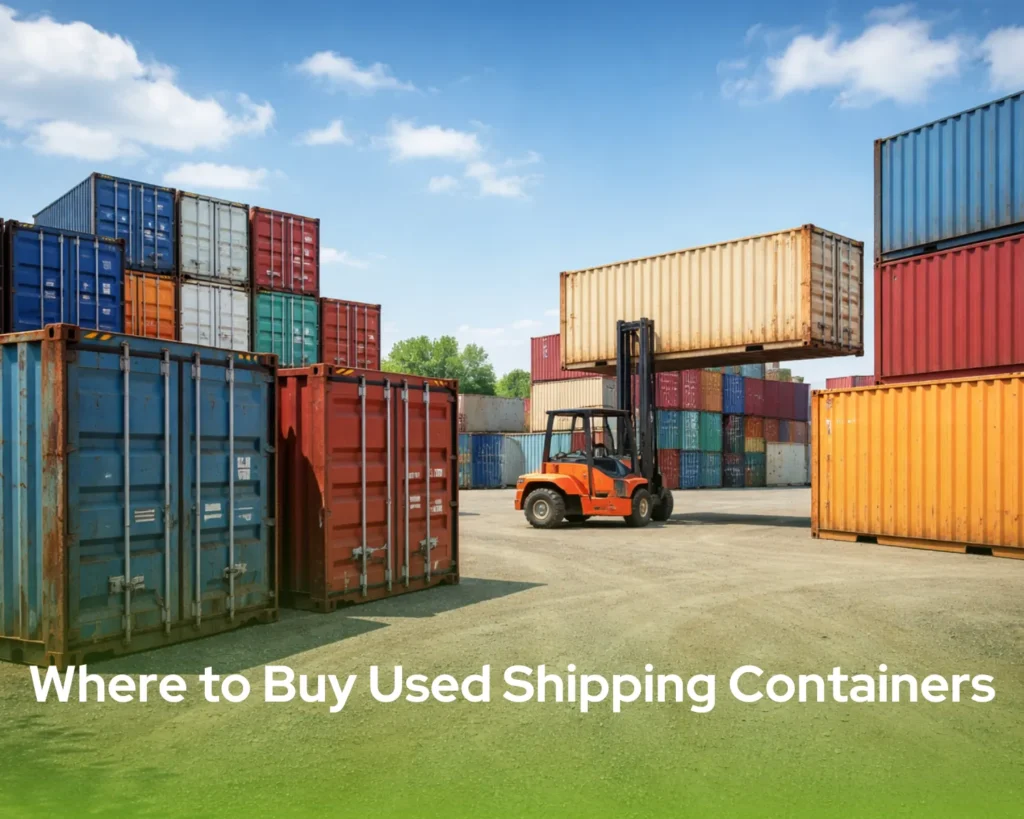
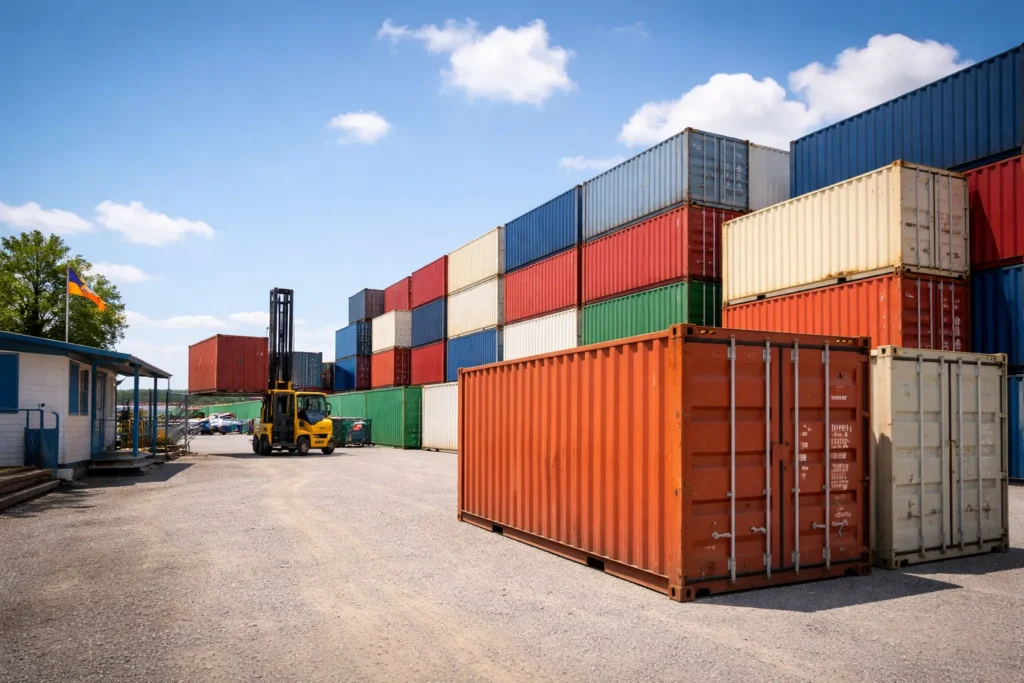
Another reliable source is the intermodal depot. Depots are the massive parking lots for containers near ports or major rail hubs. These depots act as storage facilities for leasing companies. Some depots have a retail wing where you can inspect units in person. For many buyers, the best answer to where to buy used shipping containers is a local depot because it allows for physical inspection before payment.
Finally, specialized modification firms like Pramo act as the bridge between raw industrial stock and finished architecture. If you are asking where to buy used shipping containers because you want a ready-to-use structure, buying from a specialist is safer. We source, inspect, and certify every unit we use in our Container Services.
The Technical Inspection Checklist
Knowing where to buy used shipping containers is only half the battle; knowing how to buy them is the other half. When you arrive at a lot, bring a flashlight and a level. First, check the structural integrity of the corner castings. These are the points where the container is lifted. If they are cracked or heavily rusted, the unit is a safety hazard and should be rejected immediately.
Next, perform the “light test” for holes. Step inside the container, close the doors, and look for any pinpricks of light. If you see light, water will get in, which leads to rust and mold. Also, inspect the floor condition. Used containers often have marine-grade plywood floors treated with pesticides. Ensure the floor is level and check for any chemical odors. Lastly, check the door seals and gaskets. If the rubber seals are dry-rotted, your unit will not be airtight. This is a common issue when looking at where to buy used shipping containers in older inventory lots.
Why Buy Used? The Sustainability and Cost Factor
The primary motivation for searching where to buy used shipping containers is often the price. A used unit can cost 30% to 50% less than a “one-trip” or new container. However, the environmental impact is equally significant. By repurposing a steel box that would otherwise sit in a scrapyard, you are engaging in “upcycling.”
Melting down a container to create new steel requires a massive amount of energy. In contrast, using a used container as a structural frame for a home or office saves thousands of kilowatt-hours of energy and prevents more carbon emissions. This is why where to buy used shipping containers is a top query for green builders in 2026 who want to reduce their carbon footprint while maintaining structural excellence.
Avoiding Common Scams in the Container Market
Unfortunately, the high demand has led to a rise in online scams. When researching where to buy used shipping containers, be wary of prices that seem too good to be true. Scammers often use professional-looking websites but have no actual inventory.
Common red flags include wire-transfer only requests; reputable sellers accept credit cards or standard bank transfers. Also, watch out for stock photos. If a seller cannot provide the specific ID number (the 4 letters and 7 numbers on the door) of the unit you are buying, walk away. Finally, check for a physical address. Always verify that the company has a physical yard or office. Knowing where to buy used shipping containers safely means doing your due diligence and never paying in full before verifying the existence of the product.
Delivery and Logistics: The Hidden Costs
When you finally decide where to buy used shipping containers, you must consider how the unit will reach your land. A 20ft container weighs about 2.3 tons, and a 40ft unit weighs nearly 4 tons. You cannot move these with a standard trailer. You will need a tilt-bed truck or a crane truck (Hiab) for delivery.
Ensure your site has “crane-ready” access and a level foundation. Many buyers find the perfect place where to buy used shipping containers but forget that a 40-foot truck cannot navigate a narrow, winding forest road. At Pramo, we handle the logistics from yard to foundation to ensure your prefab project is installed without a hitch, saving you the stress of coordinating heavy machinery.
Used Container Grading Systems
Sellers often use a grading system to help you understand the condition of the inventory. When looking for where to buy used shipping containers, you will see several standard terms. “One-Trip” units are practically new, having been used once to cross the ocean. These are ideal for luxury homes where aesthetics are paramount.
“Cargo Worthy” (CW) units are inspected and certified to be shipped again. This is the gold standard for structural conversions because it guarantees the frame is sound. “Wind and Watertight” (WWT) units are guaranteed to keep the rain out but might have dents or surface rust. Finally, “As-Is” units are often damaged and should be avoided unless you are an expert welder. Knowing these grades will narrow down where to buy used shipping containers that fit your specific budget and project requirements.
Modifying a Used Container: The First Steps
Once you have identified where to buy used shipping containers and your unit has been delivered, the real work begins. The first step is always rust treatment. Sandblasting and painting with a high-quality marine-grade epoxy are essential to prevent the Corten steel from degrading over time.
Next, you must consider thermal insulation. Steel is an excellent conductor of heat, meaning your used container will be an oven in the summer and a freezer in the winter without professional-grade insulation. We recommend closed-cell spray foam or high-density rock wool panels for the best results. Proper insulation also prevents condensation, which is the silent killer of steel structures.
Legalities: Permits and Zoning for Used Containers
The legality of placing a shipping container varies by city and state. Before finalizing your search for where to buy used shipping containers, check with your local planning department. Some municipalities categorize containers as “temporary structures,” while others require them to be treated as “modular homes” with full permanent foundations.
You will likely need a site plan and an engineered foundation plan. Buying from a recognized manufacturer like Pramo makes this easier, as we provide the technical documentation, wind load calculations, and structural certifications required by many local authorities. This ensures that your search for where to buy used shipping containers ends with a legal, inhabitable structure.
Why Pramo is Your Best Partner
Searching for where to buy used shipping containers can be an overwhelming experience. Between the logistics, the risk of structural damage, and the complexity of modification, it is a project that requires expert guidance. At Pramo Prefabricated, we take the guesswork out of the process. We don’t just tell you where to buy used shipping containers; we provide the entire solution.
From sourcing the highest-grade “Cargo Worthy” units to performing advanced structural modifications and architectural finishing, we turn industrial steel into high-end real estate. Whether you are looking for a singular 20ft container office or a massive multi-container development, our team is ready to assist. Stop worrying about where to buy used shipping containers and start focusing on your vision. Contact us today for a consultation and let us handle the sourcing, engineering, and delivery of your next modular structure.